
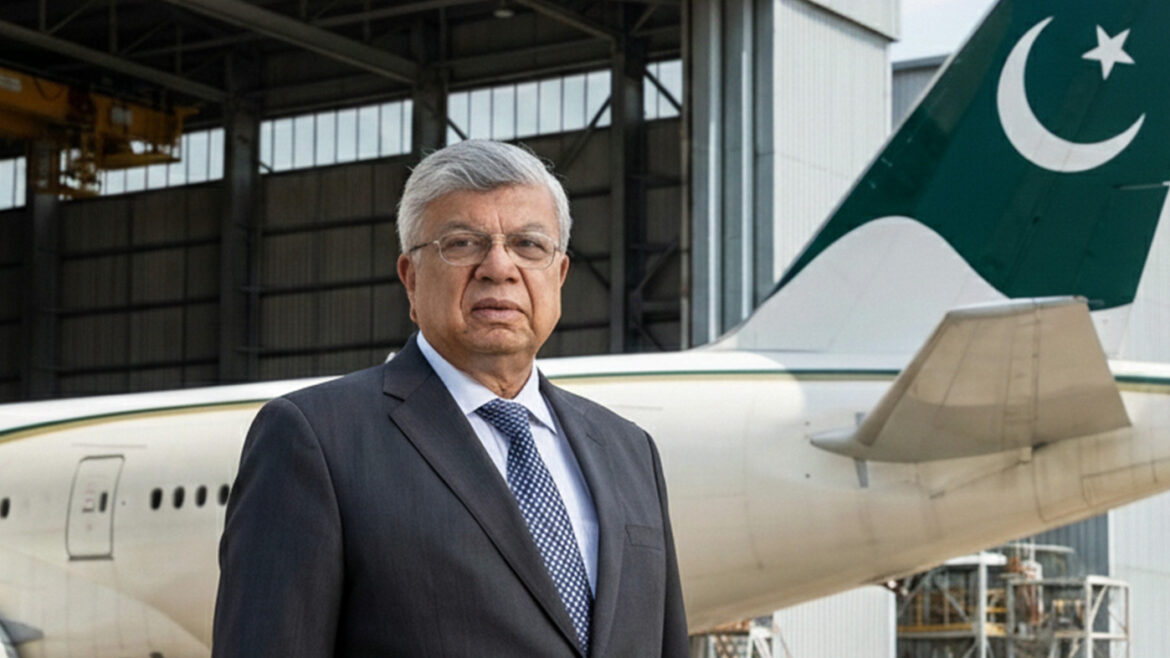
Pakistan reached a major milestone as the Arif Habib Consortium won the privatisation bid for Pakistan International Airlines (PIA) with a record offer of Rs135 billion. This deal marks the government’s second attempt to privatise the national carrier and could reshape Pakistan’s aviation sector. The bidding process took place live and attracted strong national attention.
How the Bidding Unfolded
The privatisation auction saw intense competition.
The Lucky Group opened with a bid of Rs101.5 billion.
Airblue earlier submitted an offer of Rs26.5 billion.
The Arif Habib Consortium entered with Rs115 billion, leading the process. During open bidding, the consortium raised its offer to Rs135 billion, securing victory. The winning group will acquire 75% of PIA’s shares. It may purchase the remaining 25% within 90 days.
Under the privatisation plan, 7.5% of the proceeds will go to the government. The remaining amount will support PIA’s operational improvement and fleet modernization.
Who Makes Up the Arif Habib Consortium?
The consortium includes leading Pakistani organizations:
- Arif Habib Limited
- Fatima Fertilizer
- The City School
- Lake City Holdings
This diverse partnership brings financial strength, corporate governance, and long-term strategic vision.
Why This Privatisation Succeeded
Last year, the privatisation attempt failed. It attracted only one bid of Rs10 billion, far below expectations.
This year, the outcome changed due to major reforms.
The government absorbed over Rs650 billion in liabilities.
PIA’s equity improved from negative Rs45 billion to positive Rs30 billion.
Tax exemptions on aircraft leases and partial tax relief also boosted investor confidence.
PIA’s Financial Turnaround
PIA reported a net profit of Rs26.2 billion for FY2024. In 2023, the airline posted a loss of Rs75 billion. Operational margins now exceed 12%, placing PIA among competitive global airlines. The airline operates 38 aircraft, with 18 currently active. It holds landing rights at 78 international airports, including London, Paris, and Canada. U.S. operations remain suspended.
Fleet Expansion Plan: From 38 to 65 Aircraft
After winning the bid, Arif Habib announced plans to expand PIA’s fleet.
The airline will first restore operations to 38 aircraft.
In the next phase, the fleet will grow to 65 aircraft.
This expansion aims to improve connectivity, service quality, and international competitiveness.
Workforce and Asset Details
PIA reduced its workforce from 11,500 to around 6,500 employees.
The company guarantees job security for one year after privatisation.
Voluntary separation schemes may follow.
The PIA Holding Company will continue to pay pensions and benefits to retired staff.
The deal excludes high-value assets, including PIA-owned hotels in New York and Paris. The agreement covers core airline operations, cargo services, kitchens, and training facilities.
A Turning Point for Pakistan’s Aviation Sector
Privatisation will end years of financial strain on the national treasury. PIA’s losses previously cost billions of rupees annually. Although the government receives limited upfront cash, the long-term gains are significant. A profitable PIA will no longer rely on taxpayer support. Industry experts call this move a turning point. After 21 years of losses, PIA has a clear path toward sustainable growth.
Final Thoughts
The Rs135 billion acquisition sends a strong signal to investors. Pakistan can now execute large-scale reforms with transparency and confidence. If managed effectively, this deal can restore PIA’s reputation and set a new standard for state-owned enterprise reforms.